About
A practiced general aviation response plan for Oregon
ODART exists so that roles, responsibilities, and airlift procedures are defined and rehearsed long before a catastrophic incident.
Overview
Who ODART is
The Oregon Disaster Airlift Response Team (ODART) is a 501(c)(3) non-profit founded with the vision that there should be a general aviation response plan in place before a catastrophic or disaster event occurs in Oregon, a plan which clearly defines roles and responsibilities ahead of time, and one that is regularly practiced to avoid chaos and delays in times of need.
ODART is comprised of a statewide network of volunteer general aviation pilots, amateur radio operators, logistics personnel, and ground support crews who are prepared to assist the public good by delivering vitally needed and oftentimes critical supplies or personnel via small aircraft, thus providing rapid relief to remote and islanded communities suffering from emergency and disaster incidents.
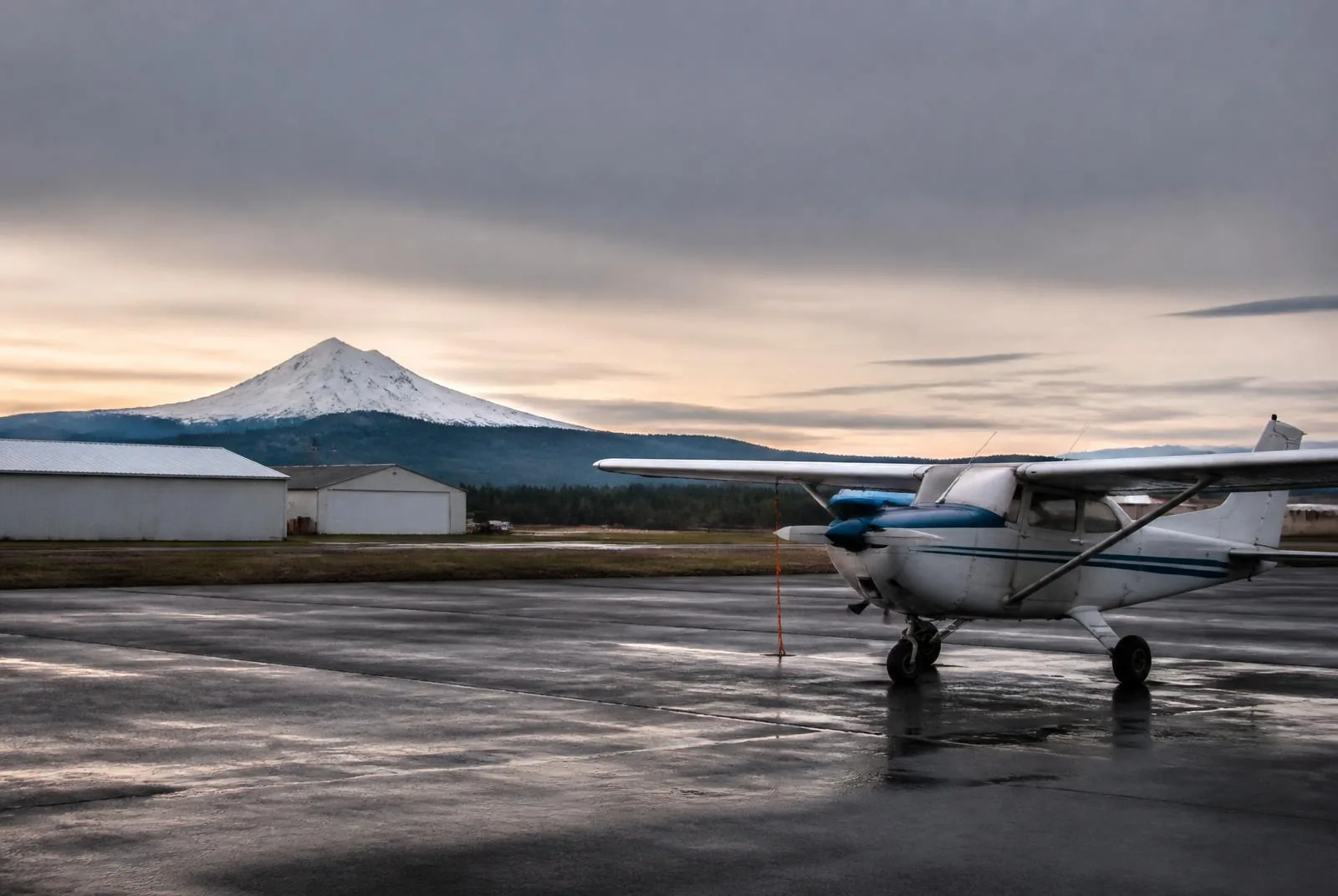
General aviation aircraft can access landing areas which are too small for most commercial aircraft, float planes can land on lakes and rivers, helicopters can utilize roadways and fields, and small “Unmanned Aircraft Systems” (sUAS, drones) can perform aerial observations and other tasks in places where aircraft are unable to operate (e.g. a compact area, beneath a cloud or smoke layer, or in places suspected to be hazardous to responders).
Capabilities
What ODART can provide
Functional service areas published on the current ODART site for the agencies and organizations it supports.
- Situational Awareness
Aerial rapid damage assessments (windshield surveys) of critical/threatened infrastructure to check for obvious damage and/or operational status. Observations are recorded and available for use by Incident Commanders and by designated (federal, tribal, state, county, and local) agencies.
Windshield survey destination examples
Highways, bridges, airfields, railroads, ferry terminals, waterways, port facilities, resilience hubs, dams, levees, hospitals, long-term care facilities, medical supply chain facilities, public water supplies, wastewater systems, emergency operations centers, police and fire stations, public safety answering points, government offices, correctional facilities, structures threatened or affected by fires, fire and containment boundaries, schools, commercial food supply chain facilities, shelters and potential shelters, flooding sites, electrical generation and transmission, petroleum pipelines and storage, fuel stations, communications facilities, radio towers, data centers, natural resources sites, crops, animal herds, natural gas facilities, fixed hazmat facilities, hazardous materials accident sites, and nuclear facilities.
- Aerial Transportation of Cargo
Movement of supplies into an impact area which cannot be reached via ground transportation.
Cargo flight manifest examples
First aid and medical supplies, life-sustaining medicines, food, bottled water, small temporary shelters, incident management supplies, replacement supplies for isolated community resilience hubs, personal protection equipment, pharmaceutical devices, backup radios, suitcase-size satellite cellular units, sUAS equipment, SAR mission support supplies, pet and animal shelter supplies, agricultural seeds, pathogen test kits, blood and blood products, decontamination equipment, portable generators, radiological and contamination testing equipment, water and soil samples, small repair parts, empty sand bags, and fatality management supplies.
- Aerial Transportation of People
Movement of personnel into and/or out of an impact area which cannot be reached via ground transportation.
Personnel transportation examples
Agency officials, incident management and response personnel, search teams, personnel with specialized skills, medical personnel, medical examiners, mass care personnel, veterinary services providers, persons who require frequent medications or treatment, energy asset owners and operators, engineering and technical support personnel, communications personnel, radio systems repair technicians, sUAS pilots, and public works responders.
- Ground and Marine Transportation
Provided via affiliated volunteer organizations.
- Management of Spontaneous Aviation Volunteers
Coordination of unaffiliated aviation volunteers who arrive to help during an incident.
Who ODART serves
A transportation resource for response partners
ODART is a transportation resource in both the “Emergency Support Function” (ESF) and “Community” Lifeline response and incident support organizational models. In full-scale exercises conducted annually since 2022, ODART has collaborated with federal agencies (USCG, CAP, USV-JSC), 13 tribal nations (in OR, WA, CA), state agencies (ODAV, OEM, ODHS-OREM, ODOE), county and city emergency managers, medical facilities, airport owners and managers, and food banks.
ODART is prepared to serve any temporarily remote or isolated community throughout the state with minimal prior notice. On an “every day” basis, ODART is establishing and maintaining relationships across the state.
ODART may be activated upon request by a federal agency, tribal government (sovereign nation), state agency, or county or city government. Community service organizations, as prearranged under Memorandums of Understanding, may also request assistance. Out-of-State DART groups and similar Volunteer Pilot Organizations (VPOs) may request ODART activation to provide mutual aid. Flight operations are conducted without charge in accordance with 14 CFR § 91.
Eligible requestors
- Federal agencies
- Tribal governments (sovereign nations)
- State agencies
- County and city governments
- Community service organizations with a prearranged Memorandum of Understanding
- Out-of-state DART groups and similar Volunteer Pilot Organizations (VPOs) requesting mutual aid
Preparedness
Strategies to build resilience
ODART’s published strategies for building resilience in Oregon communities.
Partner with governmental agencies who may require or be coordinating transportation of hydration, food, medical, shelter, and other relief supplies to remote and/or isolated communities which cannot be reached by ground transportation.
Recruit, train, and conduct realistic disaster relief exercises with volunteer pilots, communications personnel, and logistics and other ground support crew members.
Implement protocols established within the National Incident Management System (NIMS) so that ODART can easily plug into response operations by governmental agencies.
Establish a statewide general aviation resiliency network consisting of geographically distributed resilience hubs (Staging Division airports). Although loss of one or more resilience hubs during a severe incident would increase complexity and decrease efficiency, such a loss could be tolerated within the statewide network.
Conduct periodic training and exercises to maintain operational readiness for pilots, communications personnel, and ground support crew members. At least annually, conduct an exercise based on a Cascadia Subduction Zone “megathrust” incident scenario.
Organization
Leadership and governance
Needs ODART input
[INSERT BOARD AND LEADERSHIP ROSTER], [INSERT FOUNDING DATE AND HISTORY], and [INSERT EIN / 501(c)(3) DETERMINATION REFERENCE IF ODART WANTS IT PUBLISHED]. None of this appears on the current site, so nothing has been written on ODART’s behalf.
Next steps
Next steps with ODART
Request assistance for your agency or community, volunteer with a staging location, or support the mission.